Solutions / Pharmaceutical and sanitary water
USP-compliant purified water (PW) and water for injection (WFI) systems
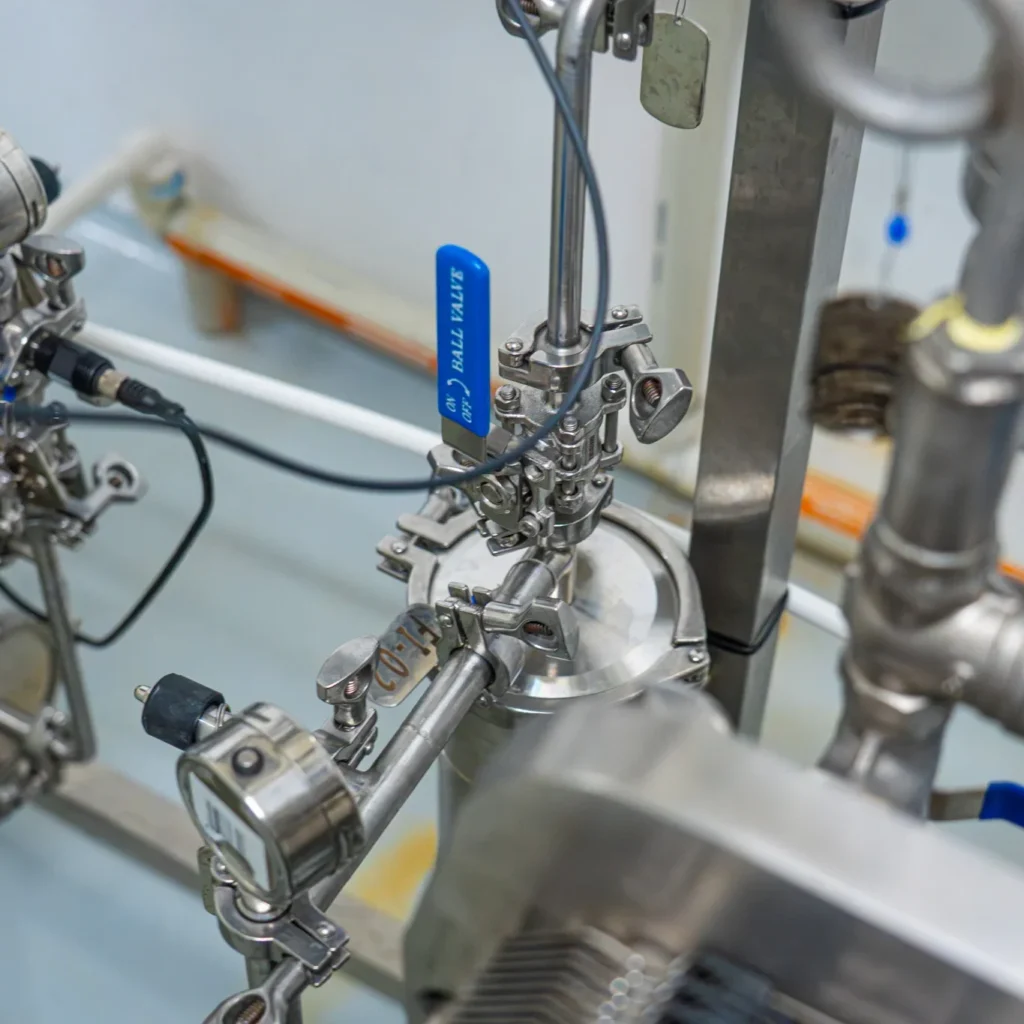
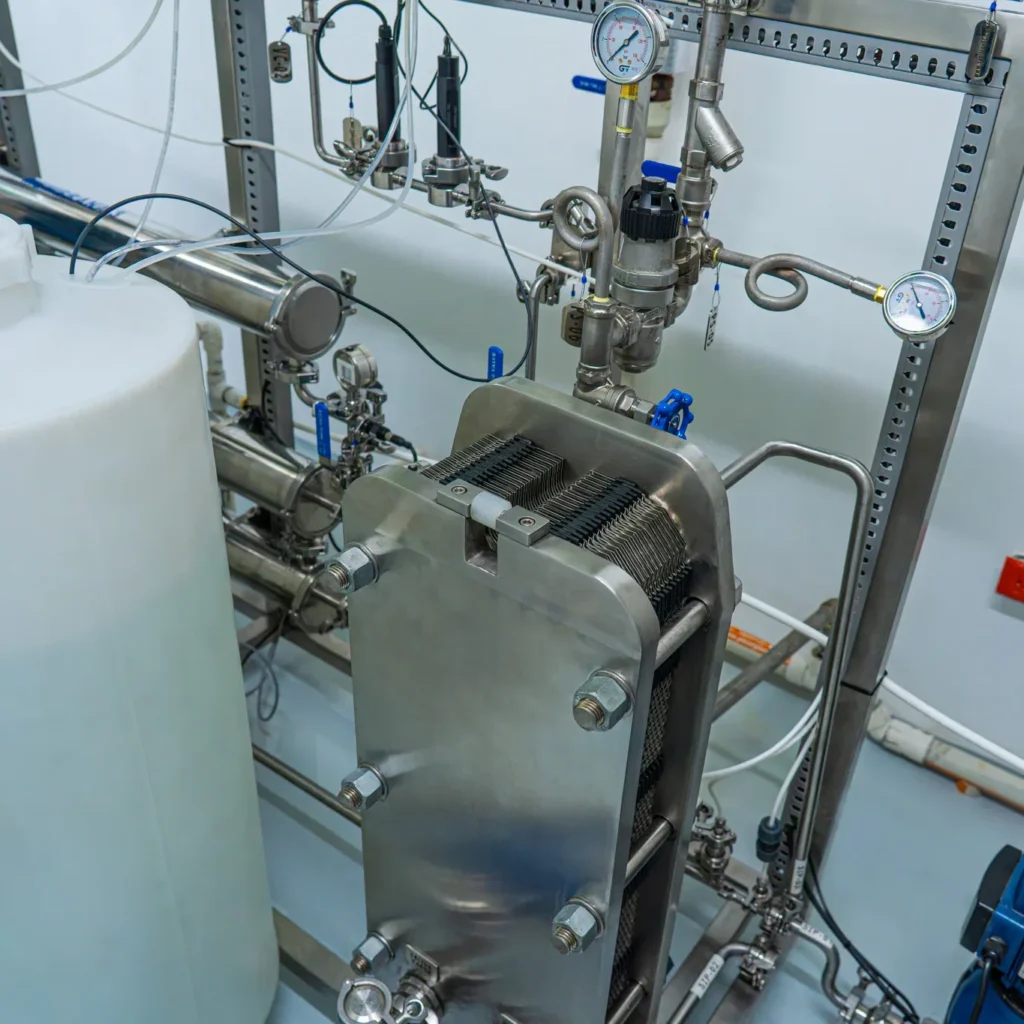
We design, fabricate, install and qualify pharmaceutical water systems that meet USP standards and Good Manufacturing Practices. Each system is conceived as an integrated unit, from generation to point of use, with the control, traceability and documentation your quality system requires.
≤ 1.3 µS/cm at 25 °CPW and WFI conductivity limit, USP <645>
Reference regulatory framework
- USP <1231> Water for Pharmaceutical Purposes
- USP monographs Purified Water and Water for Injection
- USP <645> Conductivity
- USP <643> Total organic carbon
- USP <85> Bacterial endotoxins
- Good Manufacturing Practices (GMP)
- ARCSA
- Ph. Eur.
- ISPE Baseline Guide Vol. 4
- ASME BPE
From generation to point of use
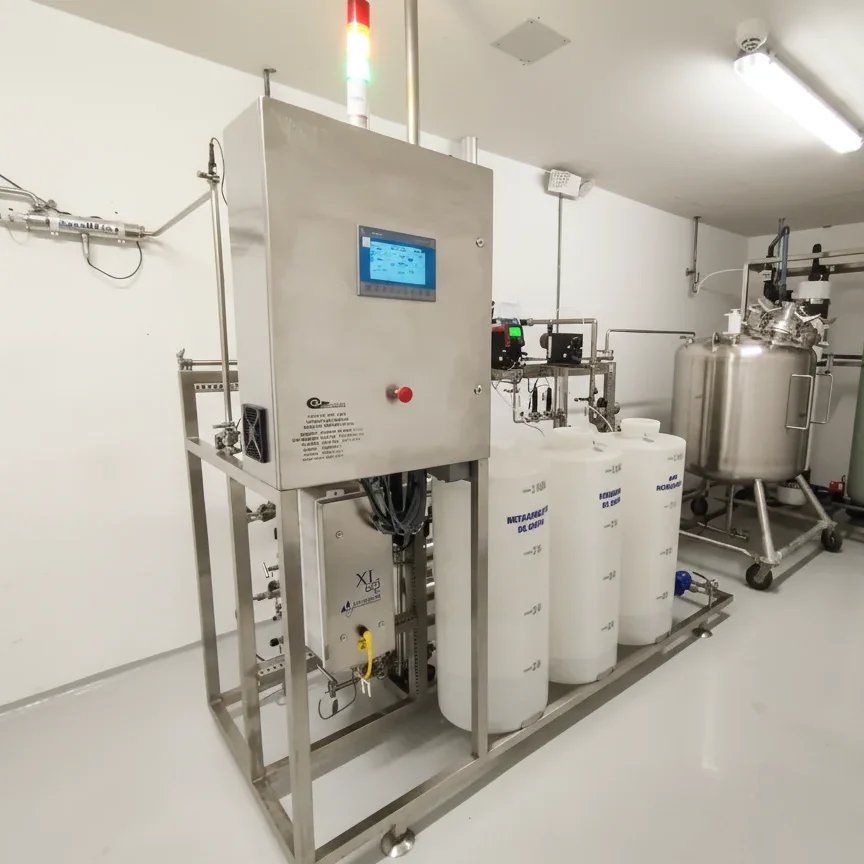
USP Purified Water
Purified water (PW) generation
Pretreatment and double-pass reverse osmosis train to produce purified water of stable quality, with continuous conductivity and TOC monitoring.
See technical details
Typical generation train
- Pretreatment: multimedia filtration, softening and oxidant neutralization.
- Double-pass reverse osmosis: removal of salts, organic matter, microorganisms and endotoxins.
- UV disinfection at the outlet of the generation system.
- Control: PLC with HMI, continuous conductivity and TOC measurement, and diversion of out-of-spec water.
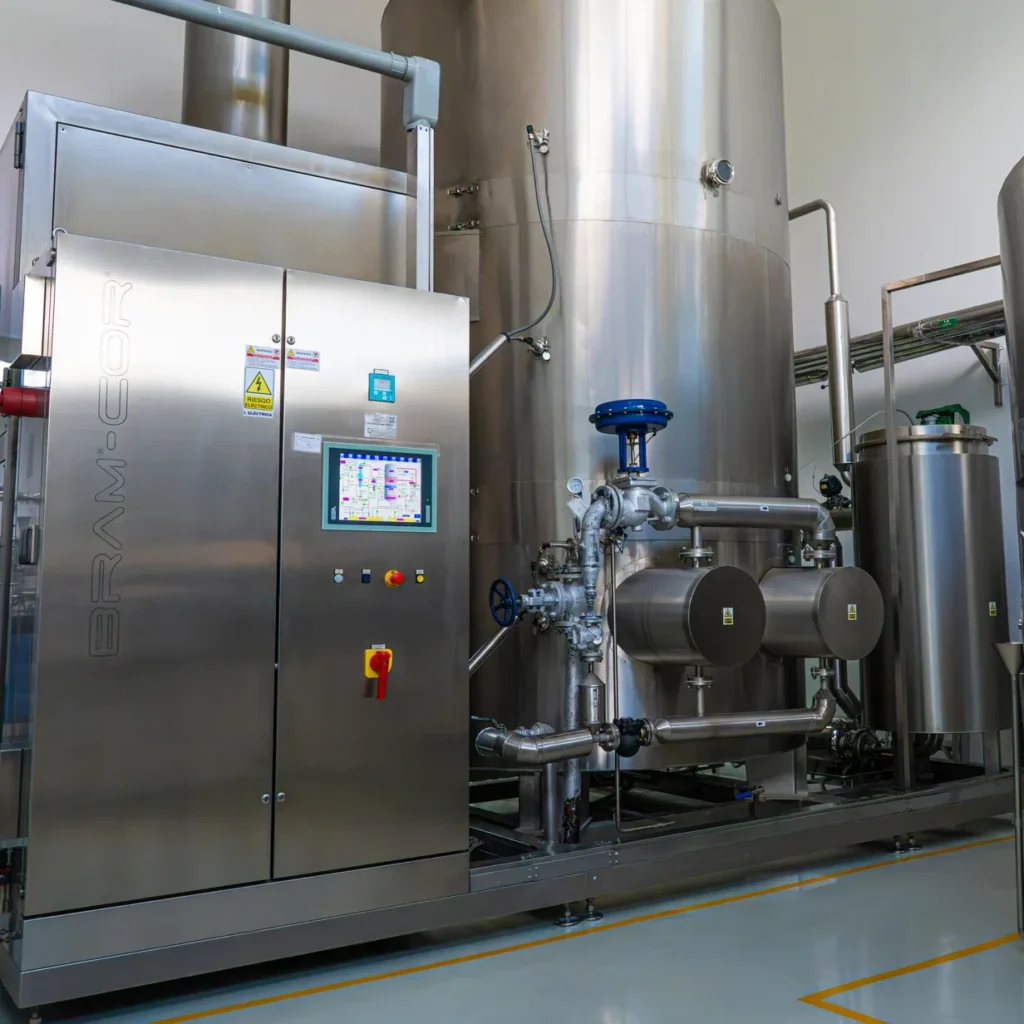
USP Water for Injection
Water for injection (WFI) generation
WFI production by membrane technology and electrodeionization, with endotoxin control and a hot or cold operating strategy.
See technical details
Technology and operating strategy
- Generation: by distillation or membranes (double-pass RO and EDI), according to USP and Ph. Eur.
- Hot or cold operation: depending on consumption and the temperature required at each point of use.
- Endotoxins: multiple barriers in generation and validated thermal sanitization.
- Construction: 316L stainless steel, orbital welding and elimination of dead legs according to ASME BPE.
- Monitoring: continuous conductivity, TOC and temperature, with automatic diversion of out-of-spec water.
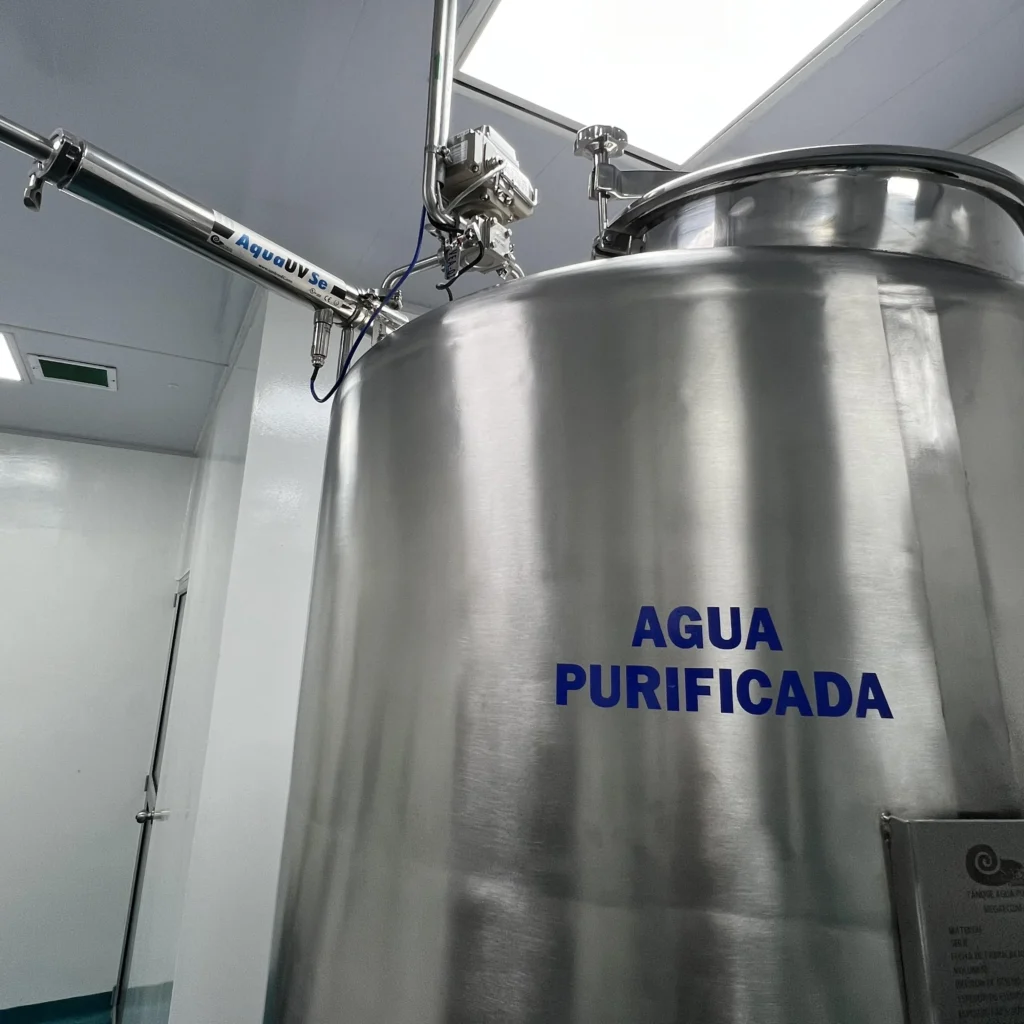
For PW and WFI
Storage and distribution
Sanitary tanks and continuous recirculation loops that preserve water quality up to each point of use.
See technical details
Loop components
- Sanitary tank in 316L stainless steel, with spray ball and 0.2 µm hydrophobic vent filter.
- Sanitary pumps with variable frequency drive to maintain loop velocity.
- Continuous recirculation returning to the tank, with no dead-end branches.
- Sanitization thermal, ozone or chemical, depending on the microbiological control strategy.
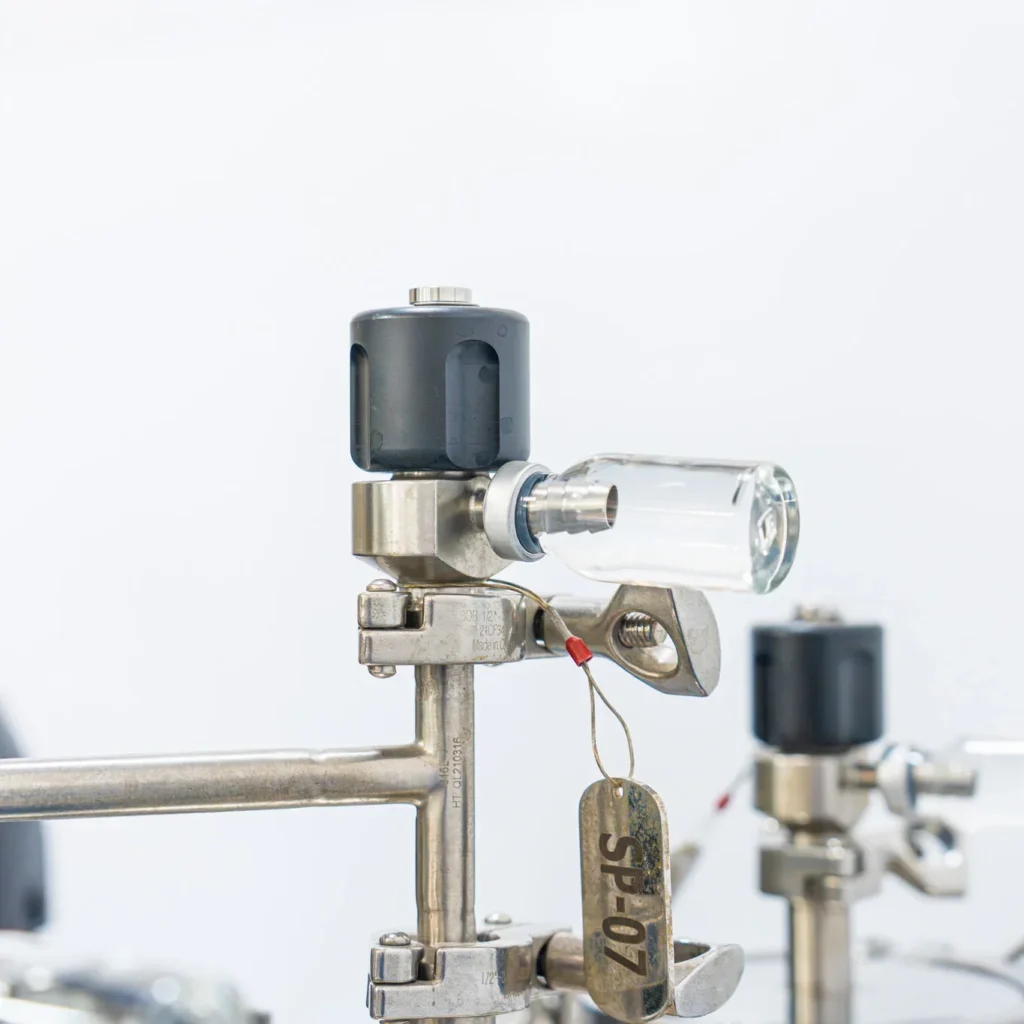
- Points of use and sampling points with zero-dead-leg diaphragm valves.
Differences between PW and WFI
The choice of water type depends on the intended use, the product’s route of administration and the process stage.
| Criterion | Purified water (PW) | Water for injection (WFI) |
|---|---|---|
| Typical use | Oral and topical dosage forms, equipment washing, clean steam generator feed | Parenteral products, final rinse of containers and equipment in contact with sterile product |
| Conductivity | ≤ 1.3 µS/cm at 25 °C (USP <645>, stage 1) | ≤ 1.3 µS/cm at 25 °C (USP <645>, stage 1) |
| TOC | ≤ 500 ppb (USP <643>) | ≤ 500 ppb (USP <643>) |
| Microbial action level | 100 CFU/mL (USP <1231>) | 10 CFU/100 mL (USP <1231>) |
| Bacterial endotoxins | Not specified | < 0.25 EU/mL (USP <85>) |
| Generation technology | Double-pass reverse osmosis | Electrodeionization |
System life cycle
We support your project from requirements definition to performance qualification, with the documentation your quality system requires. Expand each stage to see its scope and deliverables.
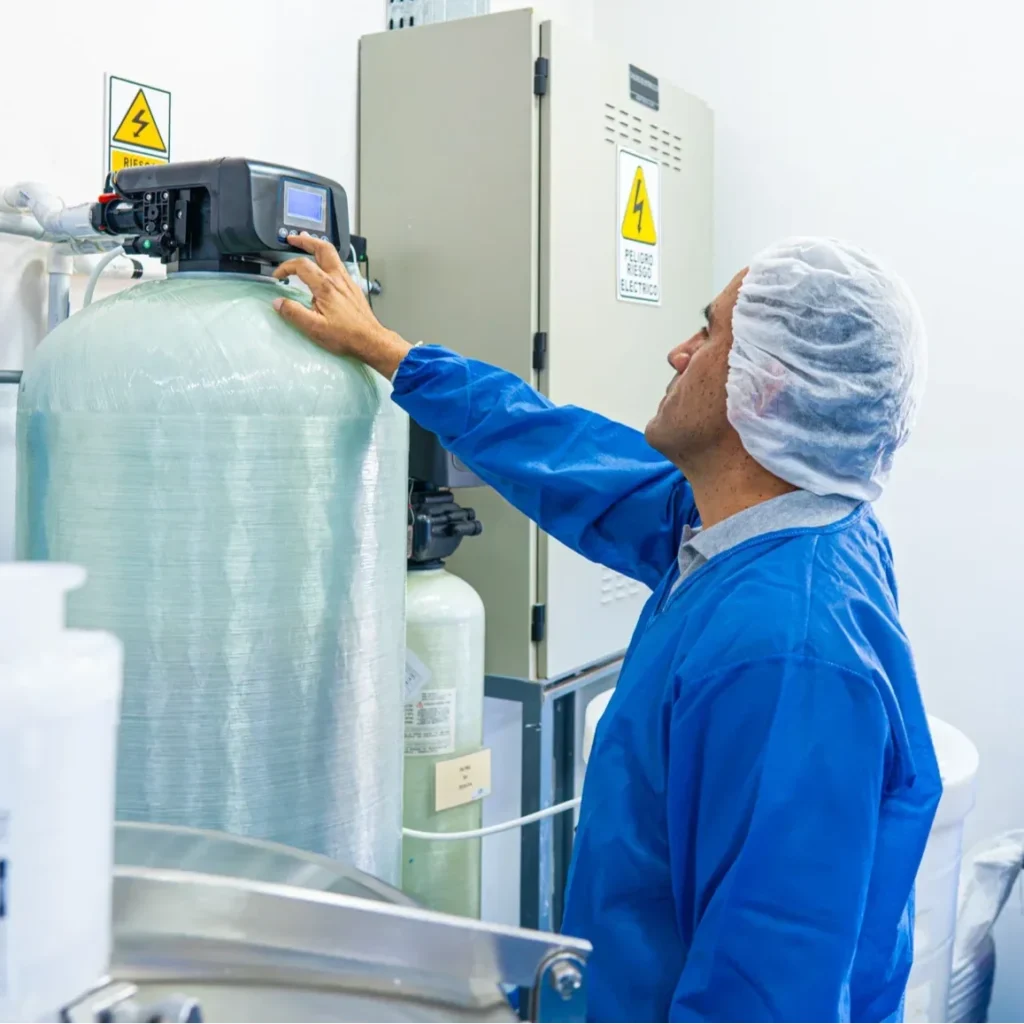
URSUser requirements specification
This is the document in which your organization defines what the system must achieve: water grade, daily consumption and peak flow per point of use, number and location of points of use, sanitization method, and control and data logging requirements. All subsequent stages are verified against the URS.
Deliverables: URS reviewed and approved jointly with your team, based on the analysis of the feed water and your process.
DQEngineering and design qualification
We develop conceptual, basic and detailed engineering from the URS. Design qualification (DQ) verifies and documents that the design meets every requirement of the URS, the USP and Good Manufacturing Practices before fabrication begins.
Deliverables: P&ID diagrams, functional and design specifications, traceability matrix and DQ report.
FATFabrication and factory testing
The system is built to the approved design and tested at the factory before shipment. Factory acceptance tests (FAT) verify equipment and instruments, control sequences and alarms, and allow deviations to be corrected before reaching your plant.
Deliverables: FAT protocol and report, and fabrication records.
IQInstallation, site acceptance testing (SAT) and installation qualification
Installation and interconnection of the system at your plant, followed by site acceptance tests (SAT). Installation qualification (IQ) documents that equipment, materials, instruments and connections were installed according to the approved design.
Deliverables: SAT and IQ protocols and reports, as-built drawings and instrument calibration certificates.
OQOperational qualification
Demonstrates that the system operates within the defined ranges under all its working conditions: control sequences, alarms, interlocks, sanitization cycles and fault response.
Deliverables: OQ protocol and report.
PQPhased performance qualification, with sampling at each point of use
Demonstrates that the system consistently delivers compliant water under real operating conditions. It is carried out in phases, with intensive sampling at each point of use at the start and follow-up afterwards to assess seasonal variation in the feed water.
Our contribution: technical support during execution, according to the scope agreed with your Quality department.
Orbital welding
Sanitary joints made with automated orbital welding
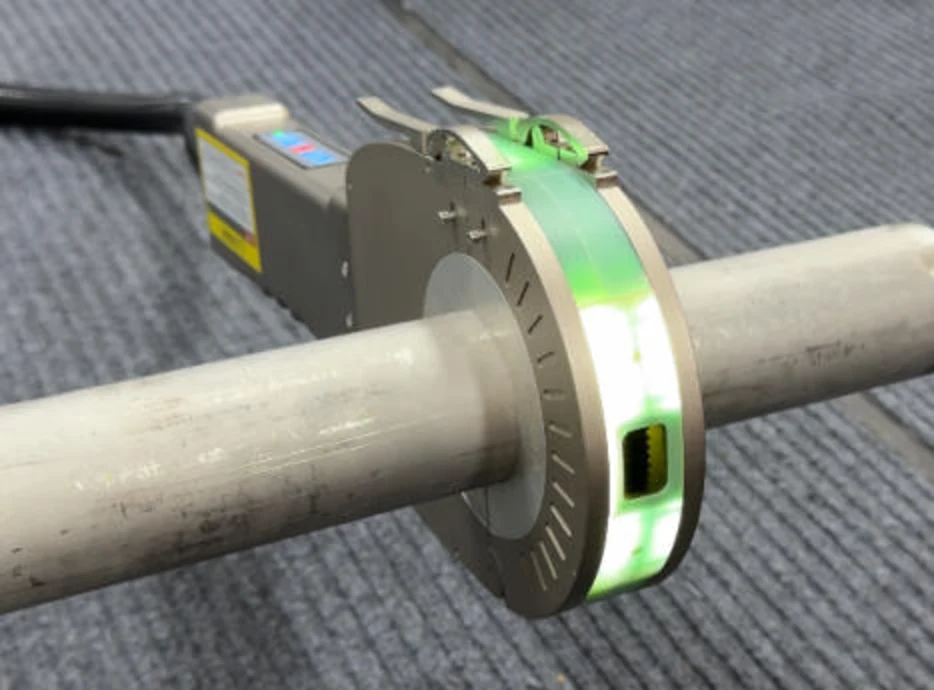
In purified water (PW) and water for injection (WFI) loops, every joint is a place where biofilm can grow. That is why we weld 316L stainless steel tubing with orbital TIG welding: an automatic head rotates around the tube and repeats the same parameters on every weld bead.
- Smooth, uniform inner bead with no burrs or crevices where bacteria can settle
- Internal inert-gas purge that prevents oxidation of the stainless steel
- Borescope inspection and a record of every weld for validation
- Repeatable quality across the whole loop, independent of the welder’s hand
Pharmaceutical projects completed

Pharmaceutical-grade water you can demonstrate at every inspection
Share with our engineering team the required water grade, the demand per point of use and your project timeline. We will present a technical proposal with the treatment train, the qualification scope and the schedule.
Contact us
Office in EcuadorDe los Eucaliptos E8-70 y calle E9, Quito 170307
Phone+593 99 871 1330
+593 2 280 8126
Emailinfo@sanitronec.com
Office hoursMonday to Friday
9:00 a.m.–12:00 p.m. and 1:00–6:00 p.m.
Office in the United States9995 NW 9th St. Circle, Suite 3, Miami, FL 33172
+1 786 972 2008