Industries / Pharmaceutical
Purified water and WFI that pass every audit
We design, build, install and validate pharmaceutical water systems to USP and ARCSA Good Manufacturing Practices, with the documentation your Quality team needs to release batches without surprises.
- Membrane-based PW and WFI
- IQ/OQ/PQ validation package
- Over 40 years in purification
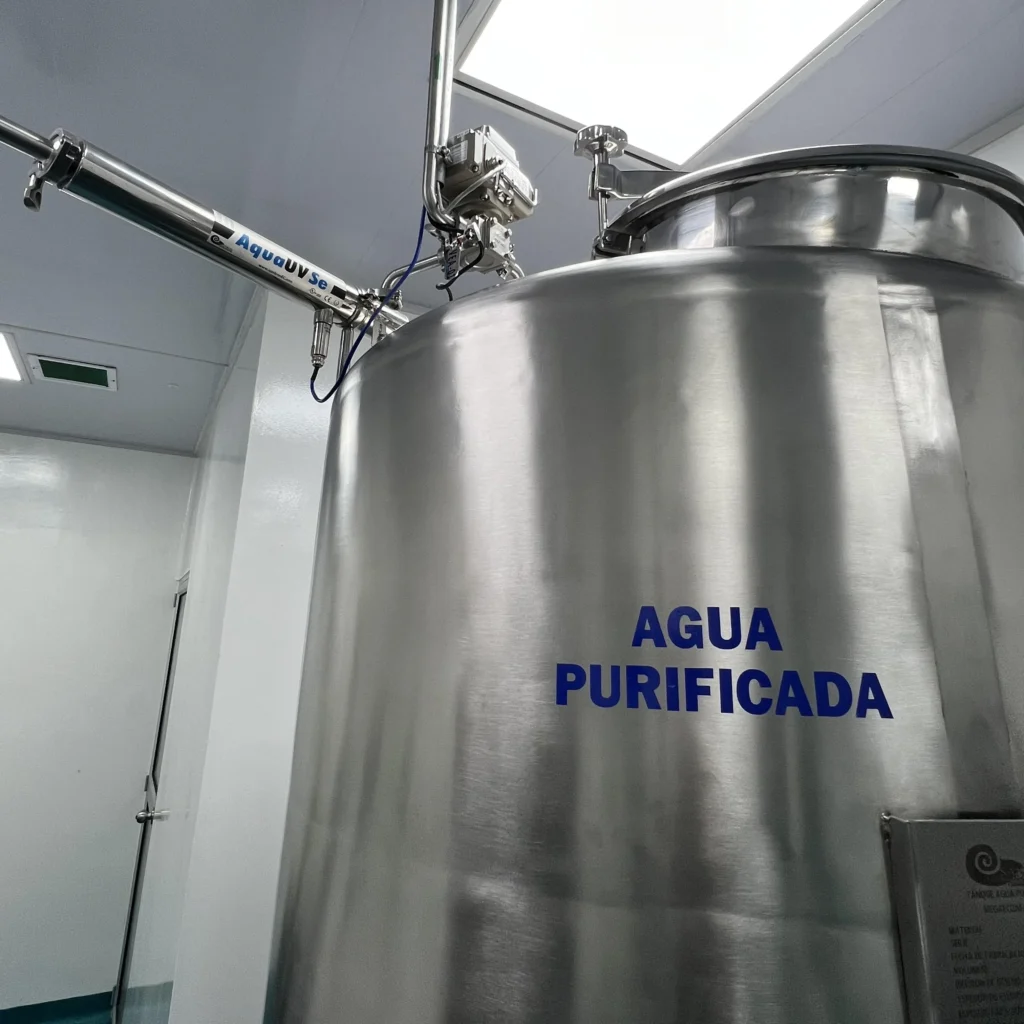
≤ 1.3 µS/cm at 25 °CPW and WFI conductivity, USP <645>
Typical purified water system
QualityUSP PW / WFI
TrainPretreatment + RO + EDI
DistributionSanitary loop in 316L stainless steel
SanitizationThermal or chemical
MonitoringOnline conductivity and TOC
ControlPLC / HMI with data logging
DocumentationURS, DQ, FAT, SAT, IQ, OQ and PQ
Design aligned withUSP <1231>, <645> and <643>, ARCSA GMP and Ph. Eur.
In pharma, water is your first ingredient
It’s the most widely used raw material in the plant and one of the most scrutinized during an inspection. A poorly designed system gives no warning: it fails during routine sampling, when the batch has already been produced.
- Inspection observationsA system without current validation, without data trending or with incomplete documentation.
- Out-of-specification resultsConductivity, TOC or microbial counts out of limits that force investigations or batch rejections.
- Biofilm in the tank and loopDead legs, low velocity or insufficient sanitization that contaminate the system from within.
- Ions and hardness in the processUnwanted reactions in the formulation and scaling in autoclaves, boilers and heat exchangers.
- Unplanned shutdownsMembranes or EDI cells damaged by poor pretreatment, with no local technical support.
Specifications we design to meet
USP reference limits for purified water and water for injection. Your system is designed with a margin over these values, not at the limit.
| Parameter | Purified water (PW) | Water for injection (WFI) | How it’s controlled |
|---|---|---|---|
| Conductivity | ≤ 1.3 µS/cm at 25 °C USP <645>, stage 1 | ≤ 1.3 µS/cm at 25 °C USP <645>, stage 1 | Temperature-compensated online sensor |
| Total organic carbon | ≤ 500 ppb USP <643> | ≤ 500 ppb USP <643> | Online TOC analyzer or sampling |
| Microbial count | Action level: 100 CFU/mL USP <1231> | Action level: 10 CFU/100 mL USP <1231> | Sampling at points of use, analysis by an accredited laboratory |
| Bacterial endotoxins | Not specified | < 0.25 EU/mL USP <85> | Analysis by an accredited laboratory |
Reference values from the current pharmacopeia. Your plant’s alert and action levels are defined during validation according to your process and quality system.
How pharmaceutical water is produced, stage by stage
Each stage protects the next. We select the train based on your feed water analysis and the quality you must achieve.
1Pretreatment
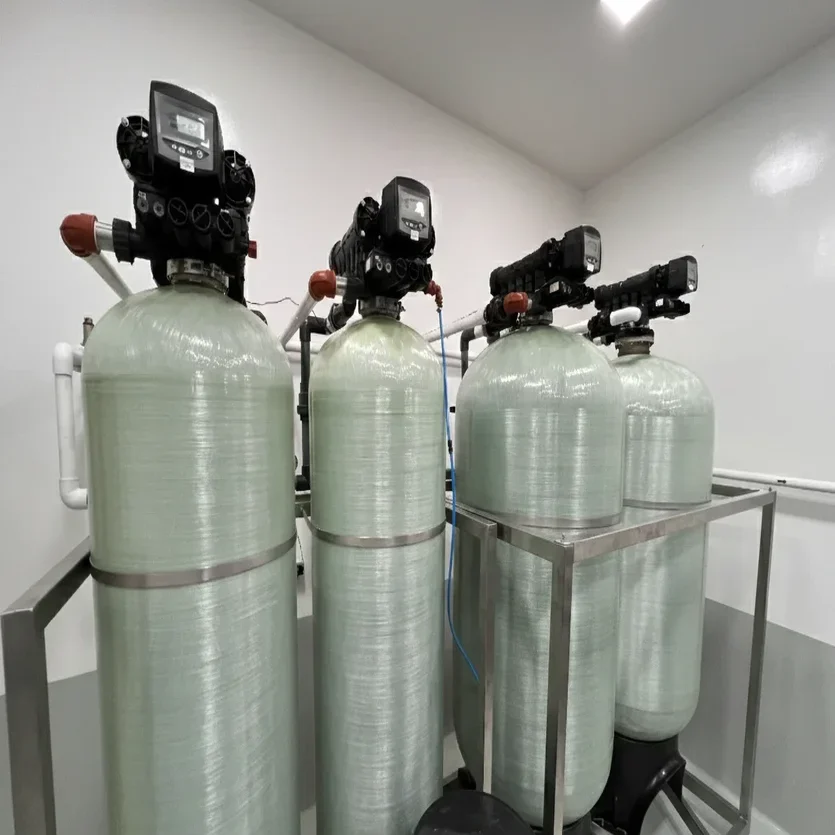
Protect the membranes
- Multimedia filtration for solids and turbidity
- Softening to remove hardness and prevent scaling
- Activated carbon or bisulfite dosing to remove chlorine
- Ultrafiltration when the source is variable
- Safety cartridge filters before the RO
Why it mattersMost membrane and EDI cell failures start here. Properly sized pretreatment extends the life of downstream equipment and stabilizes quality.
2Reverse osmosis
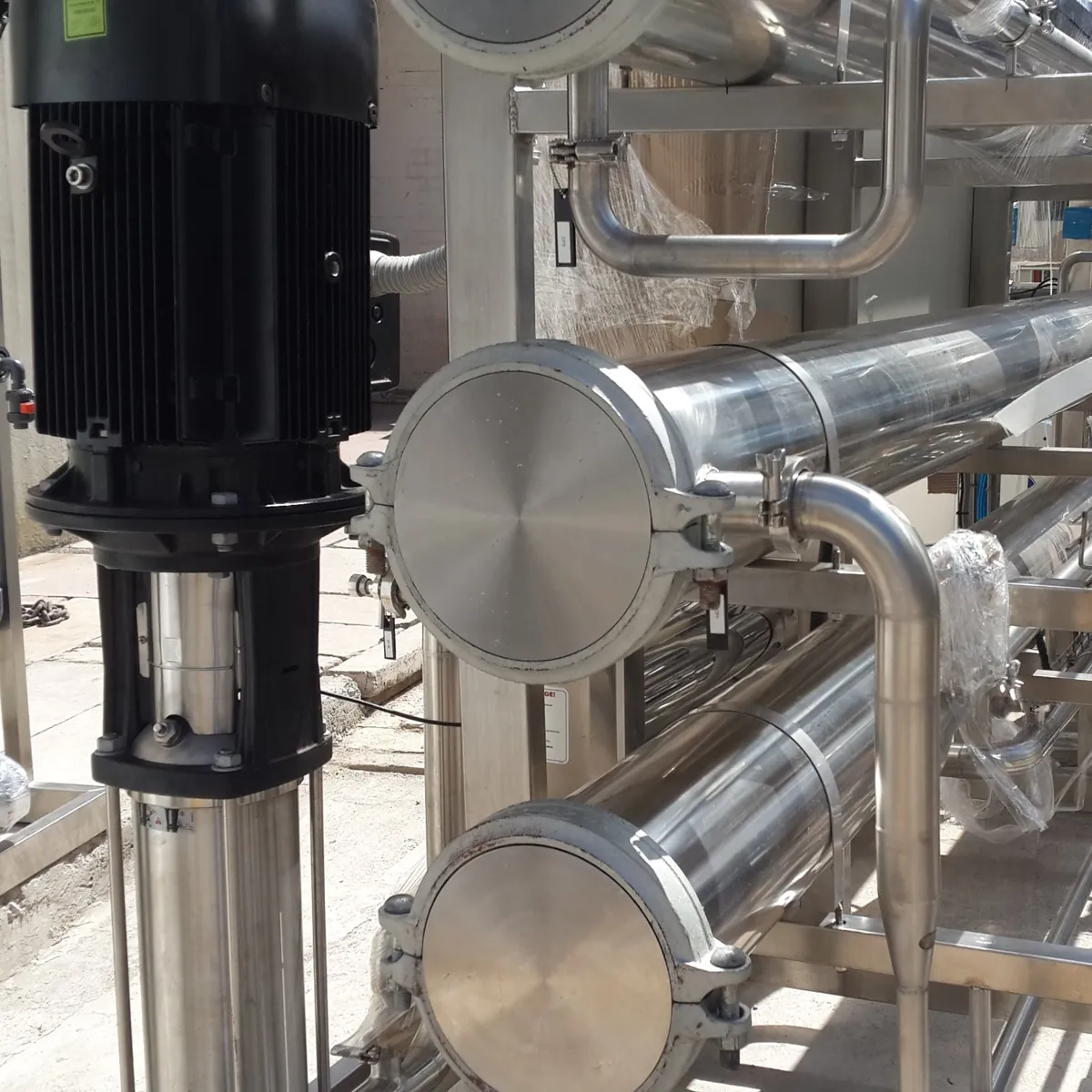
Remove salts and organics
- Rejection of dissolved salts, organics, bacteria and endotoxins
- Double pass when the feed water has high conductivity
- pH adjustment or membrane degassing to control CO₂
- Sanitary skid with integrated CIP cleaning
Why it mattersIt’s the system’s main barrier. Its design defines water recovery, energy consumption and the load reaching the EDI.
3EDI
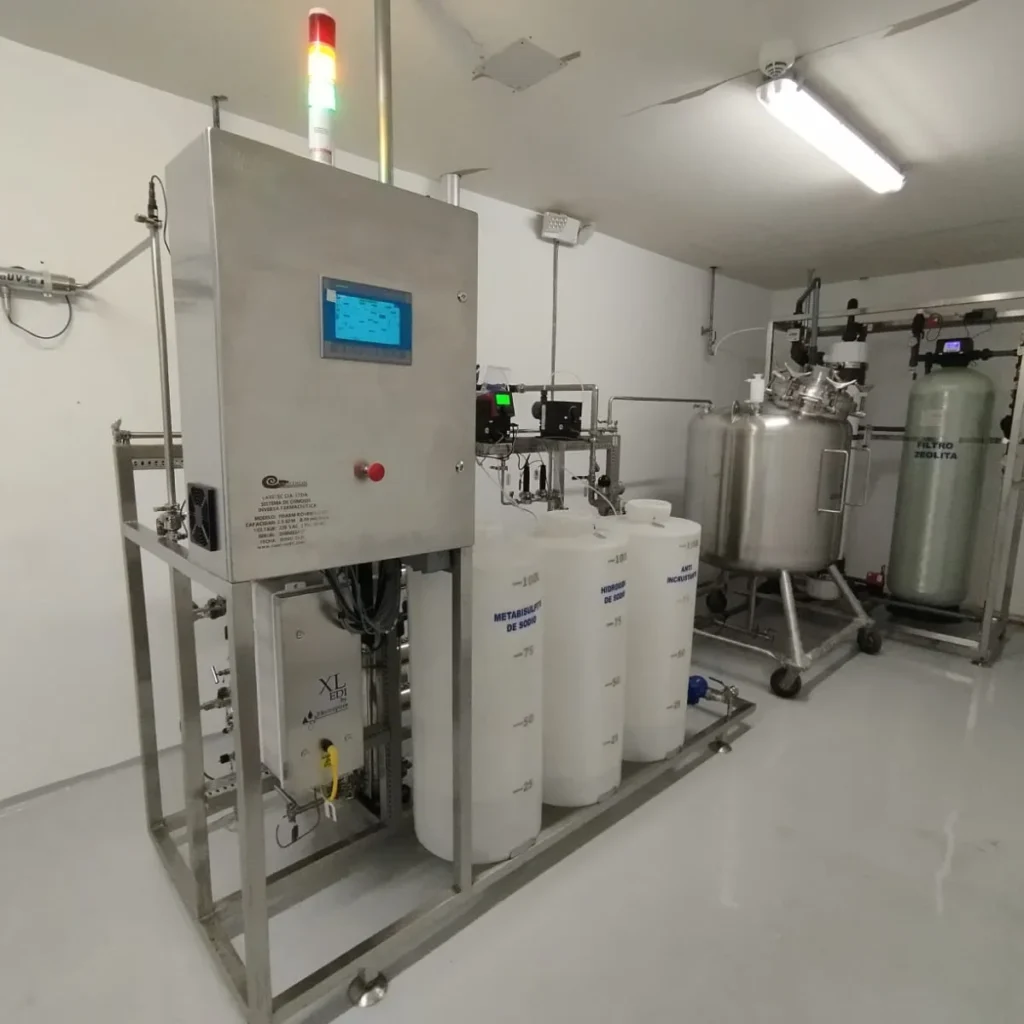
Continuous ionic polishing
- Final polishing to pharmaceutical-grade conductivity
- Continuous electrical regeneration, without acid or caustic chemicals
- Stable quality 24/7, with no regeneration cycles
- Hot-water sanitizable option
Why it mattersIt replaces regenerable ion exchange beds, eliminating chemical handling on site and quality swings between regenerations.
4Storage and loop
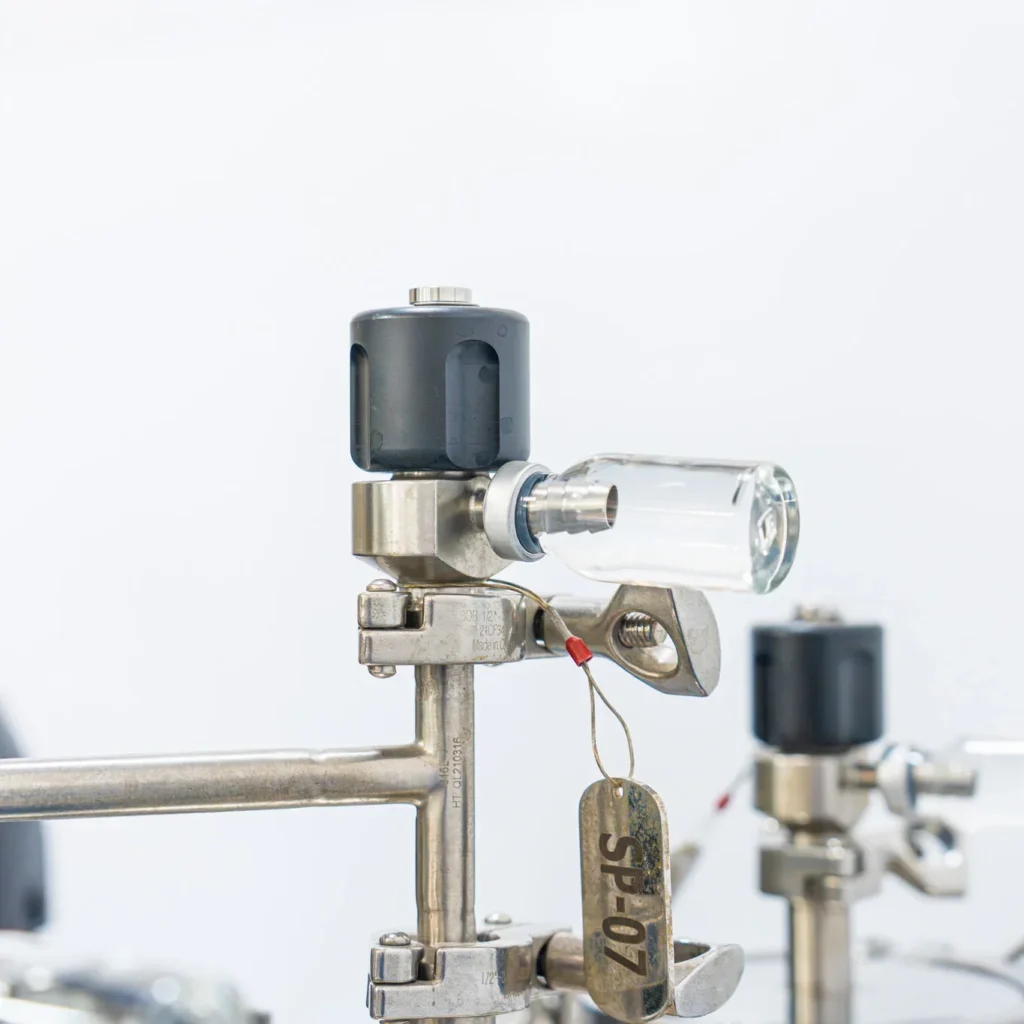
Maintain quality
- 316L sanitary tank with hydrophobic vent filter
- Continuously recirculating loop with turbulent flow
- Drainable piping with no dead legs
- UV lamp and/or ozone on the return
- Sanitary points of use and sampling points
Why it mattersProducing quality water is half the job; the other half is making sure it reaches every point of use unchanged. This is where biofilm forms if the design isn’t sanitary.
5Control and sanitization
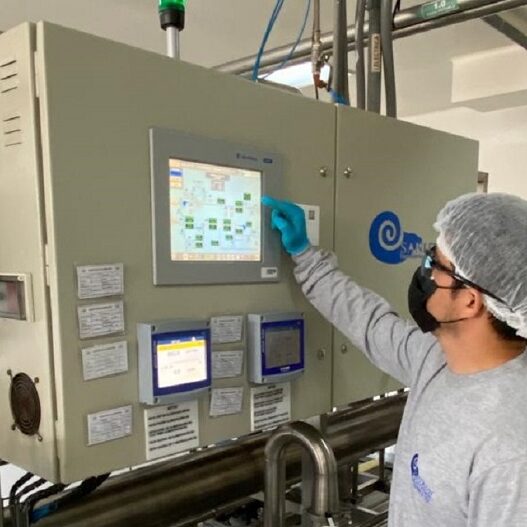
Prove compliance
- PLC with HMI, alarms and divert-to-drain logic
- Online conductivity, TOC, temperature, pressure and flow
- Data logging and trending for Quality review
- Scheduled thermal or ozone sanitization
- Integration with SCADA or plant management systems
Why it mattersIn an inspection, it’s not enough for the water to comply: you have to prove it with continuous, traceable and reviewable data.
Does your current system have observations or out-of-limit results?
We carry out a technical audit of your water system and give you a prioritized corrective plan.
Sanitary design in every detail
The engineering decisions that prevent biofilm, cross-contamination and inspection observations.
316L
Sanitary stainless steel
Water-contact surfaces with a polished internal finish and optional electropolishing.
Orbital
Orbital welding
Joints made by orbital welding, borescope inspection and a record of every weld.
Turbulent
Turbulent flow in the loop
Recirculation velocity that hinders bacterial adhesion to the walls.
ASME BPE
No dead legs
Short branches per ASME BPE and zero-dead-leg diaphragm valves.
100 %
Drainability
Slopes that allow piping and equipment to be fully drained.
Thermal or O₃
Sanitization
With hot water or ozone, in automatic or manual cycles with records.
From requirements to performance qualification
We follow the life cycle your Quality team expects. Each phase leaves approved documentation that supports the next.
- URS and assessmentTogether we gather the user requirements, the demand at each point of use and the feed water analysis.
- Design and DQProcess engineering, P&ID, specifications and design qualification against the URS.
- Fabrication and FATSkid construction and factory acceptance testing.
- Installation, SAT and IQAssembly, site testing and installation qualification: materials, welds, instruments and as-built drawings.
- OQOperational qualification: control logic, alarms, sanitization and operation across all ranges.
- Phased PQPerformance qualification with intensive sampling at each point of use; analyses are performed by an accredited laboratory.
Documentation you receive
A dossier ready to present at an ARCSA inspection or a client audit.
- User requirements specification (URS)
- Calculation report and P&ID
- DQ, IQ, OQ and PQ protocols and reports, according to the project scope
- Signed FAT and SAT protocols
- 316L material certificates
- Welding and borescope records
- Instrument calibration certificates
- As-built and isometric drawings
- Operating manuals and procedures
- Staff training records
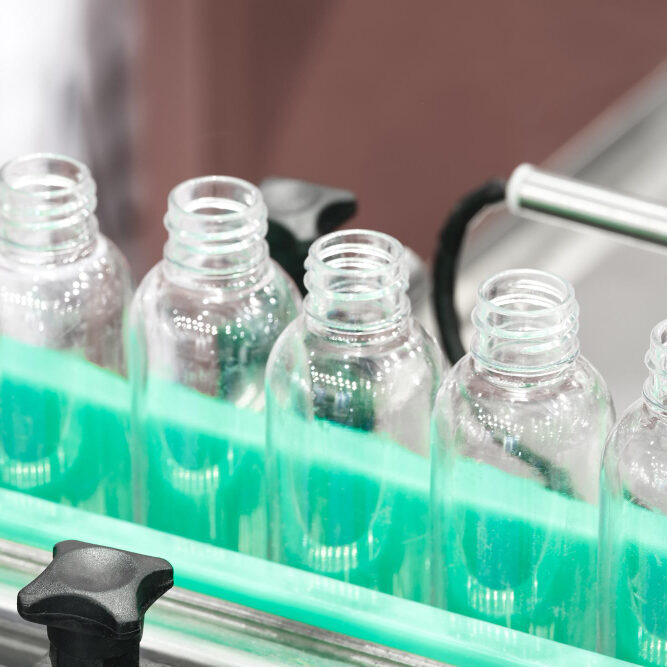
Where water is used in your plant
We size the system by point of use, because each application requires a different quality and flow.
- FormulationSyrups, oral solutions, topicals and semi-solids.
- Injectables and sterile productsWFI for product and final container rinse.
- Equipment and container washingCIP rinses and final washing in contact with product.
- Steam and autoclavesFeed for clean steam generators and sterilizers.
- Cosmetics and personal careEmulsions, shampoos and hygiene products.
- Quality control laboratoryWater for reagents, dilutions and analytical equipment.
Pharmaceutical systems delivered
Laboratories that trust Sanitron with their water.

We stay with you after start-up
A validated system must be kept in a validated state. These services help you do that.
Operation and maintenance
System always available
- Scheduled preventive maintenance
- CIP cleaning and membrane replacement
- Calibration of conductivity and TOC sensors
- Local stock of spare parts and consumables
Ongoing compliance
System always in a validated state
- Trend review and support for out-of-specification investigations
- Change control and requalification
- Training for operators and Quality staff
- Equipment rental during shutdowns or expansions
Orbital welding
Sanitary joints made with automated orbital welding
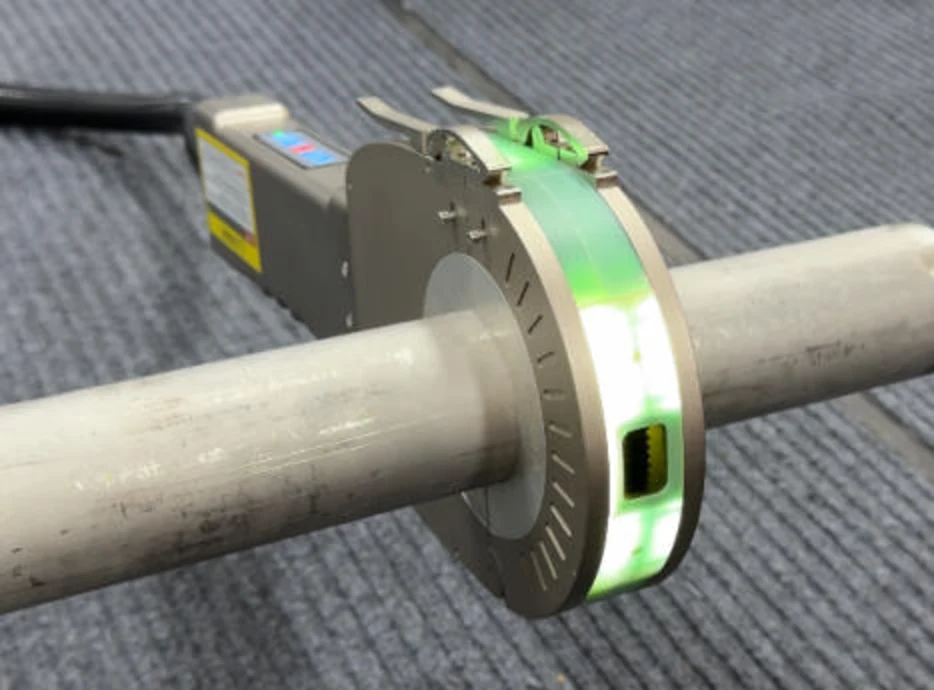
In purified water (PW) and water for injection (WFI) loops, every joint is a place where biofilm can grow. That is why we weld 316L stainless steel tubing with orbital TIG welding: an automatic head rotates around the tube and repeats the same parameters on every weld bead.
- Smooth, uniform inner bead with no burrs or crevices where bacteria can settle
- Internal inert-gas purge that prevents oxidation of the stainless steel
- Borescope inspection and a record of every weld for validation
- Repeatable quality across the whole loop, independent of the welder’s hand
Services for your pharmaceutical plant
Engineering and designFrom the URS to the installed system.
Technical auditAssessment of your current system.
System retrofitsMore stability and lower cost.
System rentalBackup during shutdowns and expansions.
To size your system we need
With this information we’ll send you a preliminary technical proposal. If you’re missing any data, we’ll gather it together during a visit.
- Required quality: PW, WFI or other
- Daily consumption and peak flow per point of use
- Feed source: municipal supply, well or cistern
- Feed water analysis, if you have one
- Number and location of points of use
- Preferred sanitization method and available space
- Expected timeline for inspection or start-up
Frequently asked questions
Can WFI be produced without distillation?
Yes. USP allows WFI to be produced by distillation or by an equivalent or superior purification process, and Ph. Eur. has accepted membrane-based methods since 2017. A well-validated double-pass RO train with EDI typically uses far less energy than a still.
EDI or ion exchange resins?
EDI provides stable quality with no chemical regeneration and no acids or caustics on site. Resins can work at very low flows, but their quality varies between regenerations and they require more control.
Thermal or ozone sanitization?
Thermal (hot water) leaves no residue and is the most common for WFI. Ozone is very effective at room temperature and is removed with UV before the point of use. We choose based on your quality, materials and energy cost.
Who performs the microbiological and endotoxin tests?
An accredited laboratory. Our system measures conductivity and TOC online; microbiological and endotoxin tests for the PQ and routine monitoring are analyzed by an accredited laboratory or your quality control lab.
Do you include validation or just the equipment?
We deliver the qualification package (DQ, IQ, OQ and PQ support) according to the project scope.
Can you improve my current system instead of replacing it?
Yes. Often it’s enough to correct the pretreatment, add EDI, redesign the loop or automate sanitization. We start with a technical audit so decisions are based on data.
Pharmaceutical water you can prove
Tell us your required quality, consumption and timeline. A Sanitron engineer will propose the purification train, the validation scope and a schedule.
Contact us
Office in EcuadorDe los Eucaliptos E8-70 y calle E9, Quito 170307
Phone numbers+593 99 871 1330
+593 2 280 8126
Emailinfo@sanitronec.com
Business hoursMonday to Friday
9:00 to 12:00 and 13:00 to 18:00
Office in the United States9995 NW 9th St. Circle, Suite 3, Miami, FL 33172
+1 786 972 2008